Pavilion Publishing and Media Ltd
Blue Sky Offices Shoreham, 25 Cecil Pashley Way, Shoreham-by-Sea, West Sussex, BN43 5FF, UNITED KINGDOM
Tel: +44 (0)1273 434 943
Email: [email protected]


This article is a practice-based study of home visiting conducted at Gade Surgery, an 8-doctor teaching and training surgery with a list size of 12,000, based at two sites in Rickmansworth and Chorleywood.
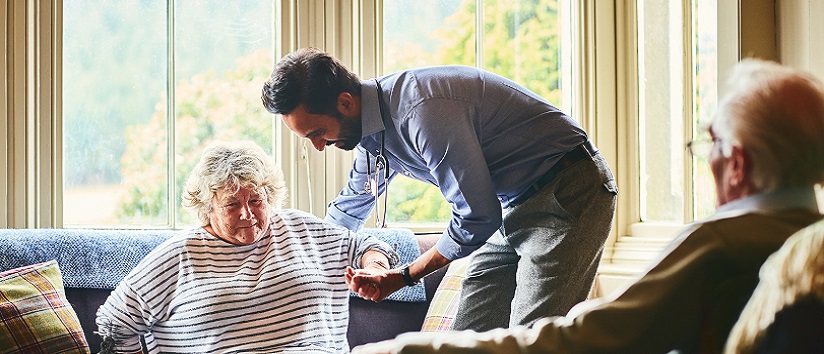
Home visiting has long been regarded as a key element of NHS general practice. In recent years the number of home visits has fallen significantly, both in the UK and elsewhere in Europe, relative to its historic peak in the 1980s.1 However, it looms high on the list of aspects of our work that divides opinion,2 and not all are convinced of its benefits.3
Indeed, as recently as November 2019, the Local Medical Committee (LMC) conference debated the current contractual requirements and a motion was passed to instruct the General Practitioners Committee (GPC) to ‘remove the anachronism of home visits from core contract work’;4 however, there were also opposing voices,5 and the GPC were not successful. Shortly after this, the Covid-19 pandemic significantly changed consulting patterns, with phone, video and SMS consultations considerably increasing their share of the methods of doctor-patient communication.6
This is a practice-based study of home visiting conducted at Gade Surgery, an 8-doctor teaching and training surgery with a list size of 12,000, based at two sites in Rickmansworth and Chorleywood, Hertfordshire commuter towns to the North-West of London.
In June 2025 the practice merged with a neighbouring practice, Chorleywood Health Centre, forming the Gade and Chorleywood Practices with a total list size of 19,400. Visiting requests typically arise from patients in their own homes, residents in supported accommodation and care home requests that fall outside of the weekly care home ward rounds.
This study was conducted at Gade Surgery shortly before the merger. All home visit requests made in April 2025 were analysed. Data was collected on the following:
Data was gathered from the electronic patient record (Emis). A total of 60 requests were received; however, on analysis of the notes, six requests were excluded due to restrictions on accessing their electronic records. Therefore, a total of 54 visit requests were included and reviewed.
In April 2025, 54 visit requests were made by 48 patients; 30 (55.6%) resulted in an in-person visit. Table 1 summarises the demographic characteristics and overall outcomes. More requests (35/54; 64.8%) were made by female patients than by male patients (19/54; 35.2%). The average age of all patients requesting visits was 81.5 years (range 47 – 96). For male patients, it was 77.4 years (range 47 – 94), whilst female patients averaged 84 years (range 54 – 96).
Table 1: Characteristics of home visit requests (April 2025)
| Characteristic | Total (n=54) | Male (n=19) | Female (n=35) |
| Mean age, years (range) | 81.5 (47-96) | 77.4 (47-94) | 84.0 (54-96) |
| Requests resulting in a visit | 30 (55.6%) | – | – |
| Requests managed without a visit | 24 (44.4%) | – | – |
| Patients making multiple requests | 6 (11.1%) | – | –
|
Over half of the requests (55.6%) resulted in a face-to-face visit. Of the remaining 24 requests that were not visited, the vast majority (87.5%) were managed by telephone consultation alone; one patient self-referred to the emergency department, one was subsequently seen in the practice, and one dermatological problem was managed via an emailed photograph and a telephone consultation.
Table 2. Outcomes of requests not resulting in a visit (n=24)
| Outcome | Number of cases |
| Managed by phone consultation | 21 |
| Seen in practice | 1 |
| Managed with photo and phone call | 1 |
| Self-referred to emergency department | 1
|
Over this period in April 2025, six patients made multiple requests: five made two visit requests each, and one made three. The person who made three requests did so because of two unrelated problems; this led to two home visits and one phone call to resolve the matter.
In three of the other cases, the second visit request related to the original call but was resolved by phone. In one case, a patient with back pain, whose original request was managed by a phone call followed by a prescription for analgesics, a subsequent visit was done due to failure to improve, but this did not result in any change of diagnosis, nor any harm to the patient.
The authors acknowledge the limitations of this modest single-practice dataset; however, and especially given the significant number of multiple requests, this does reflect the unique and unpredictable pressure that visits still generate.
Unsurprisingly, most requests were made by and for older people; however, a significant difference in the frequency of calls and in age between the male and female cohorts was evident, probably reflecting the greater number of very older women than men. Indeed, the average ages in our cohort are comparable to the latest figures for life expectancy: 78.8 for males and 82.8 for females.7
Just over half of the requests led to a visit, supporting the common practice of using triage as a vetting system, and the data suggests that this is safe to do if due consideration is given to the problem(s) presented. While resource implications are evident, home visits continue to offer unique value for holistic assessment and reassurance, particularly for the frail or socially isolated.
Faced with a GP workforce whose whole-time equivalents have shrunk by 15% in a decade,8 primary care cannot absorb any increase in visit requests, which, were this to happen, would almost certainly necessitate having separate, multi-disciplinary teams devoted solely to this purpose. It would be valuable to examine patient experiences alongside clinical outcomes and larger, multi-practice surveys to help determine how representative these patterns are across different communities.
Sustaining safe and equitable home visiting will require clear policy direction that balances patient needs with workforce sustainability.
Edin Lakasing, GP, trainer and tutor, Gade and Chorleywood Practices
Aparna Joshi, GP, Gade and Chorleywood Practices
Suthan Thangarajah, GP, trainer and tutor, Gade and Chorleywood Practices
Competing interests: none.

This website uses cookies to improve your experience. We'll assume you're ok with this, but you can opt-out if you wish. Accept Read more ...