Pavilion Publishing and Media Ltd
Blue Sky Offices Shoreham, 25 Cecil Pashley Way, Shoreham-by-Sea, West Sussex, BN43 5FF, UNITED KINGDOM
Tel: +44 (0)1273 434 943
Email: [email protected]


In this case, we report an elderly woman who presented with a 5-month history of intermittent melaena, fatigue, and dyspnoea. Oesophago-gastro-duodenoscopy (OGD) revealed multiple angioectatic lesions in the gastric antrum, consistent with gastric antral vascular ectasia (GAVE), without evidence of active bleeding.
This case underscores the diagnostic challenge of GAVE, which often presents with intermittent, non-specific symptoms. Early recognition is essential in older patients with unexplained anaemia, and management should be individualised, balancing bleeding risk against thromboembolic protection, particularly given the high prevalence of vascular, hepatic, and renal comorbidities in this cohort.
Gastric antral vascular ectasia (GAVE) is a rare cause of upper gastrointestinal (UGI) bleeding, characterised by ectatic mucosal vessels in the gastric antrum leading to chronic or recurrent blood loss. It accounts for up to 4% of non-variceal UGI haemorrhages,1 with prevalence increasing in older adults.
Clinical presentation may be acute, with classical signs such as coffee-ground vomiting or melaena, or more insidious, presenting with symptoms of chronic anaemia, including lethargy, exertional dyspnoea, and palpitations.
GAVE is frequently associated with hepatic, vascular, and renal disease. Endoscopic recognition is key, as characteristic antral vascular changes can be identified even in the absence of active bleeding.
Management options include endoscopic therapy (such as argon plasma coagulation or radiofrequency ablation), pharmacological treatment, and supportive care aimed at symptomatic relief and correction of anaemia.2,3
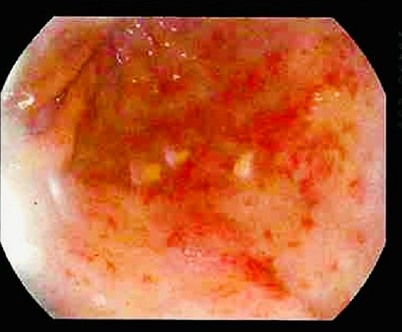
An 86-year-old woman presented with a 5-month history of intermittent melaena, fatigue, and dyspnoea. Her only notable medication was apixaban for atrial fibrillation. Laboratory investigations revealed a haemoglobin of 74 g/L, with normal liver function tests. Oesophago-gastro-duodenoscopy (OGD) demonstrated multiple angioectasias in the gastric antrum, consistent with gastric antral vascular ectasia (GAVE), without evidence of active bleeding (Fig. 1).
Management consisted of intravenous proton pump inhibitor therapy, supportive care, blood transfusion, and withholding of anticoagulation. Her haemoglobin stabilised over 48 hours, with no further incidences of melaena during her admission. She was subsequently discharged to her nursing home with outpatient follow-up.
GAVE diagnosis is often delayed due to intermittent bleeding and subtle symptoms. Clinicians should suspect it in elderly patients with chronic upper gastrointestinal bleeding or unexplained iron-deficiency anaemia. Although uncommon, its prevalence rises with age.
Conservative management may suit frail patients, but treatment must be individualised. Clinicians should carefully balance bleeding risk against thromboembolic risk when managing anticoagulation, particularly in those with metabolic syndrome or elevated venous thromboembolic risk.2,3
Tahani Shanta, Care of the Elderly, Conquest Hospital, East Sussex Hospital Trust, UK.
Nathan Siddall, Care of the Elderly, Conquest Hospital, East Sussex Hospital Trust, UK.
Muhammad JH Rahmani, Care of the Elderly, Conquest Hospital, East Sussex Hospital Trust, UK.

This website uses cookies to improve your experience. We'll assume you're ok with this, but you can opt-out if you wish. Accept Read more ...

